Overview
Manchester United has operated a separate training shirt sponsorship since 2010, making it the first Premier League club to unbundle training kit rights from its matchday shirt deal.1 Over four successive partnerships – DHL, Aon, Tezos, and from 2026/27, Betway – annual income from this category has moved from approximately £10 million to a reported £18 million, with a peak of £20–24 million during the Tezos era.2
The category carries commercial significance beyond its financial weight. Training kits appear in official club media, pre-match warm-ups, player interviews, and social content, providing sponsors with consistent, intimate brand exposure distinct from the advertising-board and kit-front visibility of matchday sponsorship. It was precisely this equivalence that made the signing of Betway contentious.
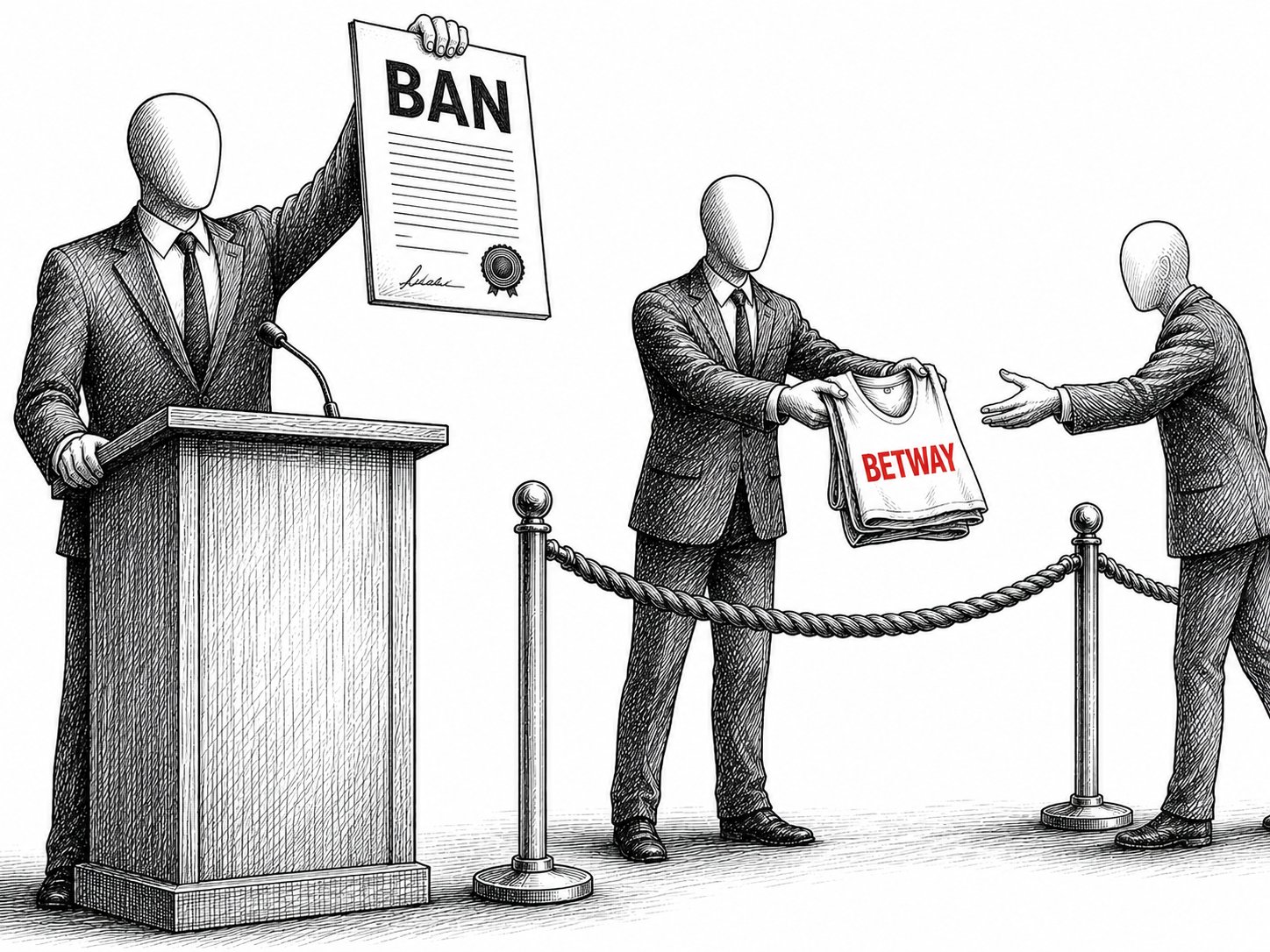
In April 2023, Premier League clubs voted to remove gambling brands from the front of matchday shirts from the start of the 2026/27 season. The ban applied to matchday shirt fronts only – not to training kits, sleeves, perimeter boards, or digital channels. Manchester United’s Betway deal, agreed in May 2026, placed a gambling brand on the chest of its players in a format that critics argued delivered functionally identical exposure to the restriction the ban was designed to impose.3
1. Structural Origin: United as Market Pioneer (2010)
Manchester United created the Premier League training kit sponsorship market. In 2010, the club agreed a four-year deal with logistics company DHL worth a reported £40 million (£10 million per year) – the first arrangement of its type in English football.4 Club chief executive David Gill described it as breaking “new ground in the English game.”5
The commercial logic was straightforward: players wore training kits during pre-match warm-ups in full stadium view, in all official Carrington-based media, and in broadcast coverage of training sessions. This represented monetisable brand inventory that had previously been unpriced. By separating training kit rights from the matchday shirt deal, United created a second revenue stream from the same playing squad without any additional performance obligation.
The DHL partnership was bought out early in October 2012, before its contracted 2014 expiry, in order to pursue a higher-value replacement.5 This early exit set a pattern of treating training kit rights as an active commercial asset rather than a fixed contractual commitment.
2. Aon Era (2013–2021): Bundling Kit and Ground Naming
In April 2013, Aon signed an eight-year agreement that extended its existing relationship with the club into training kit sponsorship and – for the first time in United’s history – naming rights to the Carrington training facility, renamed the Aon Training Complex.6 The deal was reported at approximately £15 million per year for the combined package, with the total agreement variously reported at up to £180 million.7
The bundled structure makes direct comparison with the DHL deal difficult: the per-season figure represented kit rights, ground naming, and an associated professional services element. Aon had previously been United’s matchday shirt sponsor (2010–14) and this arrangement represented a deliberate restructuring of that relationship following the club’s switch to Chevrolet for the front-of-shirt position.
The Aon deal ran its full eight-year contracted term to 2021 – the most durable training kit relationship in United’s history to date, and one of the few commercial agreements in the Glazer era to complete without documented disruption.
3. Tezos Era (2022–2025): The Crypto Premium
In February 2022, Manchester United announced Tezos – a proof-of-stake blockchain platform – as the new training kit sponsor, covering the men’s and women’s first teams.8 The deal was reported at in excess of £20 million per year at announcement, with later reporting citing £24 million per year.2
The partnership was positioned as a Web3 and blockchain technology integration, with fan engagement activation forming part of the commercial rationale. In financial terms, it represented the peak value achieved by the club for training kit rights. On expiry in June 2025, this premium was characterised by commercial analysts as a “crypto premium” – inflated above market rate by sector-specific brand-building ambitions that diminished as the crypto market contracted and Web3 commercial enthusiasm cooled.9
Tezos did not renew. The partnership expired as contracted in June 2025.
4. The Deliberate Gap (June 2025–May 2026)
Following Tezos’s departure, United left the training kit unsponsored for twelve months. Club sources indicated this was a deliberate strategy: the club had received approaches below its expected valuation and declined to proceed.10 The search process lasted more than a year before Betway was identified as a commercial fit.
The gap coincided with a structurally disrupted sponsorship market. The Premier League’s announced ban on front-of-shirt gambling sponsorship – effective 2026/27 – created a buyer’s market for non-gambling shirt-front deals and simultaneously elevated demand for alternative gambling-brand inventory including training kits and sleeves.9 United’s Champions League qualification status was also unresolved for much of this period. The confirmation of qualification in May 2026 was noted as a factor in the timing of the Betway announcement, with European nights increasing sponsor exposure value.9
5. The Betway Deal (2026–present)
In early May 2026, The Athletic reported that Manchester United were in advanced talks with Betway for a multi-year training kit sponsorship worth in excess of £18 million per year, beginning with the 2026/27 season.11 At the time of reporting, the deal was described as the most valuable single-partner training kit sponsorship in world football. The Betway logo will appear on training wear used at Carrington and across all official club media content.10
At £18 million per year, the deal is approximately £6 million below the reported peak Tezos value of £24 million. Commercial analysts attributed this gap in part to the crypto premium embedded in the Tezos deal and in part to supply-side dynamics: with multiple clubs simultaneously seeking training kit and sleeve replacements for lost front-of-shirt gambling revenue, the market had become competitive for buyers.9 Despite the reduction from Tezos, the deal was reported to rank United third among Premier League clubs by training kit value, behind Manchester City (OKX) and Liverpool (AXA), and ahead of Arsenal’s Emirates bundle at an estimated £15 million per year for the kit portion.9
Betway is a British online gambling company with a long history of Premier League association. Between 2015 and 2025, it served as principal shirt sponsor for West Ham United, with annual deal value rising from approximately £6 million to approximately £10 million on renewal.12 Betway also held commercial relationships with Manchester City, Arsenal, and Brighton prior to the United agreement.10 In 2021, Betway was issued a £11.6 million fine by the UK Gambling Commission for social responsibility and anti-money-laundering failures.13 At the time of the United deal, it held a UK licence through a white-label arrangement with Risq Capital.3
| Sponsor | Era | Annual | Total | Outcome |
|---|---|---|---|---|
| DHL | 2010–13 | ~£10m | £40m | Bought out early – Oct 2012 |
| Aon | 2013–21 | ~£15m | £120m+ | Full term – kit + Carrington naming |
| Tezos | 2022–25 | £20–24m | £60–72m | Natural expiry – not renewed |
| (none) | 2025–26 | £0 | £0 | Deliberate gap – 12 months |
| Betway | 2026–tbc | £18m+ | Multi-year | Active – gambling brand |
6. Regulatory Context: The Gambling Ban and the Training Kit Loophole
In April 2023, Premier League clubs voted to remove gambling companies from the front of matchday shirts from the start of the 2026/27 season – a voluntary measure to reduce gambling advertising. 18 of 20 clubs voted in favour.14
The ban applies exclusively to the front of matchday shirts. It does not restrict gambling brand presence on shirt sleeves, training kits, perimeter advertising, stadium signage, or digital channels.15 Eleven clubs carried front-of-shirt gambling sponsors in 2025/26, the final season before the restriction took effect.16
The regulatory gap created a secondary market. Unable to secure front-of-shirt Premier League exposure from 2026/27, gambling operators pivoted to training kits and sleeves. United’s Betway deal, and Crystal Palace’s training kit deal with Net88, were among the visible outcomes of this value migration.3 Manchester United also held Betfred as official UK betting partner and Parimatch as official betting partner for Asia, the Middle East, and North Africa in 2025/26 – making Betway an addition to, not a replacement for, an existing betting portfolio.3
| Club | Sponsor | Est. Annual | Notes |
|---|---|---|---|
| Manchester City | OKX | n/d | Crypto exchange; est. highest in PL |
| Liverpool | AXA | n/d | Bundled with training campus naming rights |
| Manchester United | Betway | £18m+ | Reported highest single-partner deal in football |
| Arsenal | Emirates | ~£15m | Kit portion within wider stadium and commercial bundle |
| Crystal Palace | Net88 | n/d | Gambling brand; part of broader training kit gambling migration |
7. The Controversy: Spirit versus Letter of the Ban
The Betway deal drew immediate criticism from anti-gambling campaigners and regulatory observers. The core argument was that training kit branding – displayed on players’ chests during warm-ups, social media content, and broadcast interviews – delivers functionally equivalent exposure to the front-of-shirt branding the ban was designed to restrict.3
Commercial analysts noted that training kit deals appeal to brands precisely because they offer what one described as “valuable engagement”: front-and-centre logo presence in intimate player interview settings and behind-the-scenes content, with an additional association with elite performance culture in training – attributes directly comparable to those a matchday shirt front provides.9
Manchester United’s position was not stated publicly in ethical terms. The club characterised the deal in commercial language: patient negotiation, Champions League leverage, and the structural opportunity created by displaced gambling spend. The UK government announced in 2026 that it was considering further regulation, including a potential ban on deals with unlicensed gambling operators – a consultation that remained open as of May 2026.3
8. Commercial Context
Manchester United’s total commercial revenue for fiscal year 2025 (year ended 30 June 2025) was a record £333.3 million, of which sponsorship revenue was £188.4 million – a 6.0% increase year-on-year, primarily driven by the first season of the Qualcomm/Snapdragon front-of-shirt deal.17 The club’s SEC Form 20-F filing lists “betting” among the key commercial partner categories underpinning this revenue.18
The twelve-month training kit gap will have suppressed sponsorship revenue between July 2025 and the Betway deal’s commencement. The full annualised contribution will first appear in the fiscal year ending 30 June 2027. United’s commercial revenue growth from 2015/16 to 2023/24 exhibited a compound annual growth rate of 1.5%, compared to a Big Six peer group average of 11.8% over the same period – recovery of the training kit revenue line is one element of a broader commercial restructuring effort.19
Summary
Manchester United created the Premier League training kit sponsorship category in 2010, pioneering a commercial model that has since been widely adopted. Over sixteen years, the category has housed four distinct partner types: a logistics company, a professional services firm with ground naming attached, a blockchain platform at peak crypto premium, and now a gambling brand navigating the structural dislocation created by the Premier League’s front-of-shirt ban.
The Betway deal is commercially defensible within the letter of Premier League regulation. The controversy it generated reflects a gap between the stated objective of the gambling ban and the regulatory perimeter drawn to implement it. Training kit branding provides sponsor exposure in the same media channels, to the same audiences, with comparable visual prominence to the shirt-front placement the ban restricts. Whether United’s willingness to exploit that gap represents a reputational cost alongside the commercial gain is a matter for editorial analysis, not this archive.
What This Entry Does Not Claim
This entry does not assert that the Betway deal is illegal or in breach of Premier League rules – it sits within the current regulatory framework. It does not confirm that the deal is formally completed; as of May 2026 it was in advanced talks per The Athletic’s reporting, and will be updated on formal confirmation. It does not confirm United’s individual vote on the April 2023 ban; their position is not publicly recorded, and the entry assumes, as a member of the apparent majority, that United did not abstain. It does not apportion the specific training kit revenue contribution within United’s reported sponsorship line, which the club does not segment publicly. It does not assess the reputational impact of the Betway deal on the club’s global brand.
References
- 1.Campaign Live (2013). Aon signs eight-year sponsorship deal with Manchester United. campaignlive.co.uk
- 2.Footy Headlines (2026). Manchester United to Sign Betway Training Kit Deal. footyheadlines.com
- 3.CasinoBeats (2026). Manchester United Signs Deals With New Betting Sponsors After Agreeing to Ban. casinobeats.com
- 4.Supply Chain Digital (2010). DHL to sponsor Manchester United training kit. supplychaindigital.com
- 5.CNN (2012). Manchester United seeks to cash in as sponsor DHL is sent packing. cnn.com
- 6.CNN (2013). Manchester United pen new multi-million dollar Aon deal. cnn.com
- 7.Marketing Week (2014). Man Utd inks £180m training ground deal with Aon. marketingweek.com
- 8.SoccerBible (2022). Man United Announce Tezos As New Training Shirt Sponsor. soccerbible.com
- 9.United In Focus / Adam Williams (2026). Inside the finances of Man United’s new training kit sponsorship as £6m drop-off revealed. unitedinfocus.com
- 10.Football Today (2026). Manchester United close in on training kit deal with Betway. footballtoday.com
- 11.The Athletic (2026), reported via Inside World Football. Manchester United in advanced talks with Betway over training kit deal. insideworldfootball.com
- 12.The West Ham Way (2025). West Ham sponsorship history. thewesthamway.com
- 13.West Ham Fans (2024). The Impact of iGaming Sponsorships on West Ham United’s Revenue. westhamfans.org
- 14.LBC News (2023). Premier League clubs agree to ban gambling sponsorship on front of club shirts from 2026/27 season. lbc.co.uk
- 15.Toronto Guardian (2026). Gambling Sponsorship and the Premier League – What Will Change in 2026/27. torontoguardian.com
- 16.CoinGenius (2026). Premier League Gambling Shirt Ban: Clubs Face 38% Sponsorship Drop. coingenius.news
- 17.Manchester United PLC (2025). Fourth Quarter and Full Year Fiscal 2025 Results. finance.yahoo.com
- 18.Manchester United PLC (2025). SEC Form 20-F, year ended 30 June 2025. sec.gov
- 19.Greg Cordell (2025). Manchester United FC: 2024/25 Financial Results. gregcordell.substack.com [Secondary analysis; not official club data.]