Overview
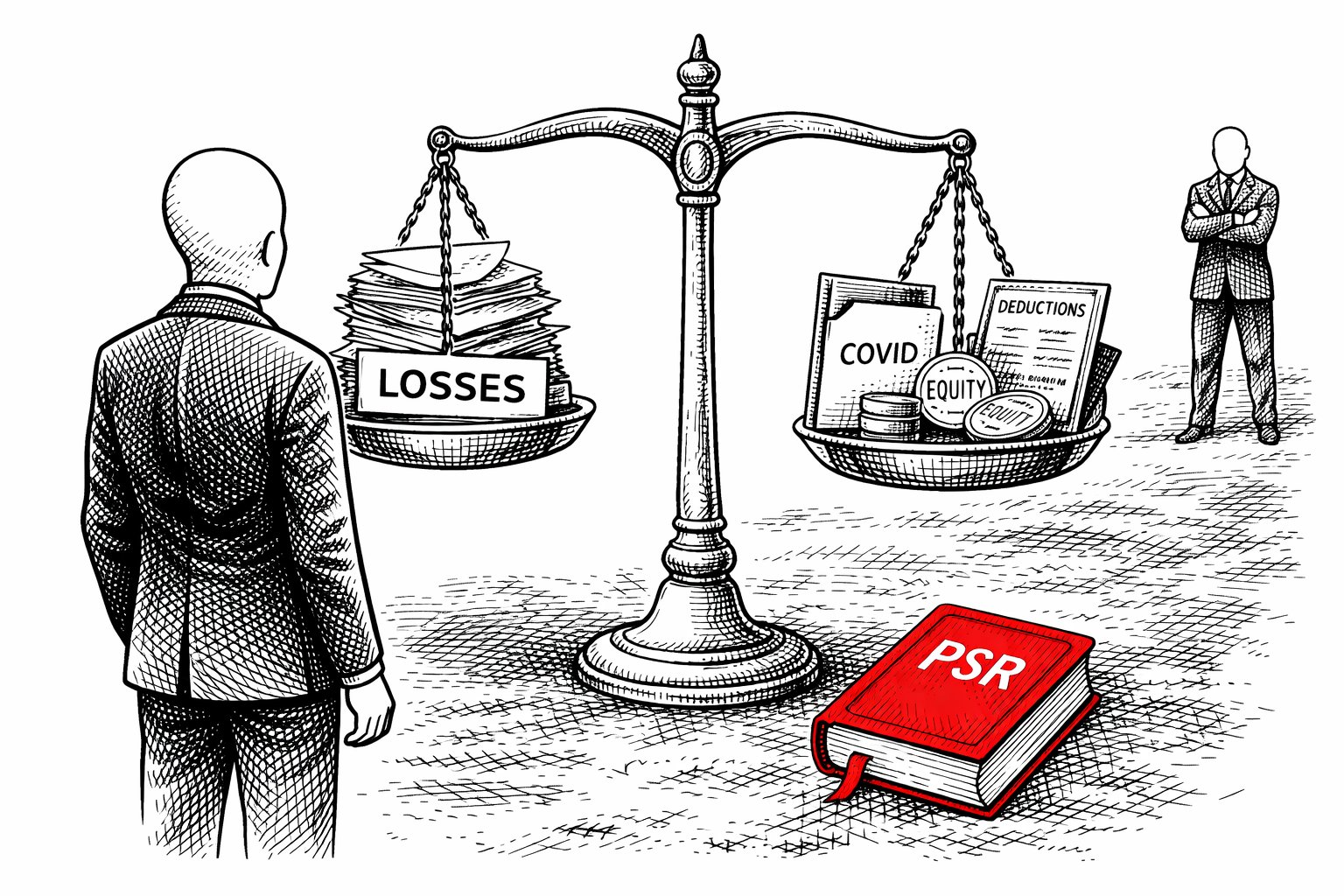
Financial Fair Play (FFP) and its successor framework, the Premier League's Profit and Sustainability Rules (PSR), are the two principal regulatory systems governing club financial conduct across the Glazer ownership period at Manchester United. Both systems share a core objective: preventing clubs from accumulating losses at a scale that threatens their long-term solvency. Their mechanics, thresholds, and enforcement powers differ in material ways, and their interaction with Manchester United's financial structure under the Glazers produces a set of observable tensions that this entry documents.
FFP was agreed by UEFA in September 2009 and implemented from the 2011/12 season.2 The Premier League's PSR framework came into force at the start of the 2013/14 season.10 UEFA replaced FFP with new Financial Sustainability Regulations (FSR) in June 2022.1 The Premier League has voted to replace PSR with a Squad Cost Ratio model from 2026/27.19
Manchester United have been formally compliant with both frameworks throughout, with one exception: a €300,000 UEFA fine in July 2023 for a minor break-even deficit, carrying no transfer ban or competition restriction. This entry does not make claims about whether the regulatory frameworks were adequate, appropriately designed, or properly enforced.
UEFA Financial Fair Play: Framework and Mechanics (2011–2022)
UEFA introduced Financial Fair Play in response to a documented deterioration in European club finances. In 2009, aggregate net losses across Europe's top-division clubs stood at €1.6 billion, with more than half of the 665 clubs reviewed reporting losses over the preceding year.1, 20 The central mechanism was the break-even requirement (BER): clubs were restricted from accumulating relevant losses beyond a defined acceptable deviation over a rolling three-year monitoring period, assessed by UEFA's Club Financial Control Body (CFCB).3
Relevant expenses under FFP included player wages, transfer amortisation, agent fees, and - significantly for the Glazer context - finance costs, meaning interest on debt.5 Infrastructure investment, youth development, women's football, and community expenditure were explicitly excluded from the break-even calculation, creating an incentive structure that rewarded long-term capital investment over short-term squad expenditure.3, 4
Acceptable Deviation Thresholds
| Monitoring period | Max deficit (with equity / without) | Years assessed | Notes |
|---|---|---|---|
| 2013/14 (2-yr) | €45m / €5m | 2011/12 – 2012/13 | Transitional; 2-year only |
| 2014/15 (3-yr) | €45m / €5m | 2011/12 – 2013/14 | First full 3-year assessment |
| 2015/16 – 2021/22 | €30m / €5m | Rolling 3-year | Tightened from 2015/16 |
| 2022/23 onwards (FSR) | €60m / €5m | Rolling 3-year | Relaxed deviation; squad cost rule added |
The first monitoring period covered only the 2011/12 and 2012/13 financial years as a transitional measure.4 Clubs could exceed the base €5m deviation only if the additional loss was covered by direct owner equity injection - a mechanism the Glazer family did not use across any period prior to the INEOS transaction in 2024.6
The first enforcement cycle concluded in May 2014. Manchester City and Paris Saint-Germain were each fined €60m (€30m conditional on future compliance) and subjected to squad size and transfer restrictions for break-even breaches across 2011/12–2013/14.5
Premier League PSR: Framework and Mechanics (2013–present)
The Premier League's PSR framework was introduced at the start of the 2013/14 season, catalysed in part by Portsmouth's insolvency in 2010, which demonstrated the systemic risk of clubs accumulating unsustainable cost structures within the top flight.10 The core threshold permits a maximum loss of £105m over a rolling three-year period. Of that total, only £15m may be losses from the club's own operations; any additional losses up to the ceiling must be underwritten by owner equity injection described as 'secure funding', which cannot take the form of a loan.7, 8
PSR allowable deductions reduce a club's reported loss before the £105m threshold is applied. Deductible costs include infrastructure depreciation, women's football expenditure, youth development, and community programmes.9 Transfer fees are amortised over contract length, limiting their immediate PSR impact. From December 2023, clubs voted to cap amortisation at five years regardless of contract length, closing a mechanism previously used to extend transfer costs over longer periods.11
The £105m threshold has not been adjusted for inflation since its introduction in 2013. Capital Law has noted that an inflation-adjusted equivalent in 2024 would be approximately £200m - nearly double the current limit - against a backdrop of sharply rising transfer fees and wages across the same period.10
PSR Enforcement Precedents
Prior to 2023/24, no Premier League club had been formally sanctioned under PSR. In November 2023, Everton received a ten-point deduction for breaching PSR in the 2021/22 season, reduced to six points on appeal following a dispute over the calculation of allowable losses.7 Nottingham Forest were separately sanctioned with a four-point deduction for the 2022/23 period.7 Manchester City face substantially broader charges encompassing alleged inaccuracies in financial reporting across a longer historical period; those proceedings were ongoing at the time this entry was compiled.7
Regulatory Timeline 2009–2026
| Year | Event | Regulator | Detail |
|---|---|---|---|
| 2009 | FFP agreed | UEFA | Rules agreed by UEFA Financial Control Panel, September 2009 |
| 2011/12 | FFP implemented | UEFA | First monitoring period begins; break-even assessment introduced |
| 2013/14 | PSR introduced | Premier League | PL Profit and Sustainability Rules take effect |
| 2014 | First sanctions | UEFA CFCB | Man City and PSG fined €60m each for 2011/12–2013/14 breach |
| 2022 | FFP replaced | UEFA | New Financial Sustainability Regulations (FSR): three-pillar model |
| Jul 2023 | Man Utd fined | UEFA | €300k fine for minor break-even deficit (COVID accounting dispute) |
| Nov 2023 | Everton deducted | Premier League | 10-point deduction (reduced to 6 on appeal); first PL PSR sanction |
| 2026/27 | PSR replaced | Premier League | Squad Cost Ratio (SCR) to replace PSR (pending confirmation) |
Manchester United: The Ferguson Era (2009–2013)
At FFP's introduction in 2009, Manchester United's chief executive David Gill - sitting on the European Club Association board - publicly stated that the club would meet the new break-even rules, despite reported debts of £716.5m.2 This assessment proved accurate. Manchester United remained compliant with UEFA FFP throughout the first monitoring periods, and no breach was recorded or alleged.
The basis for that compliance is analytically significant. During the Ferguson era, United were generating consistent Champions League broadcast and prize money, substantial commercial revenue, and regular profitability. Broadcast revenue alone was £101.6m in 2012/13, the final full Ferguson season.22 This revenue scale provided sufficient surplus above relevant expenses to absorb both operating costs and the finance charges that Glazer-era debt produced.
The structural point is that FFP's break-even requirement did not address the acquisition debt loaded onto the club via the 2005 leveraged buyout. UEFA explicitly acknowledged at FFP's introduction that leveraged buyouts were permitted under standard company law and were outside the scope of the regulations.2 Debt interest - approximately £62m per year at peak - counted as a relevant expense against the break-even calculation, reducing FFP headroom, but the club's commercial and broadcast revenue was large enough throughout the Ferguson years to remain comfortably within the permitted deviation.21, 5
UEFA's rules also permitted clubs to add back up to €25m of owner equity injection to the break-even calculation. The Glazer family made no equity contribution to the club across the full pre-INEOS ownership period. That €25m headroom therefore went unused throughout the Glazer era.6
Post-Ferguson Exposure and the PSR Window (2013–2024)
The compliance picture shifted materially following Ferguson's retirement in May 2013. The combination of declining Champions League participation, rising wages and transfer amortisation, and sustained debt interest produced a trajectory of growing losses that would eventually test PSR limits - even as headline revenue continued to grow.
Manchester United remained formally compliant with both UEFA FFP and Premier League PSR through 2013 to 2021. In seasons of Champions League absence, broadcast revenue fell substantially, but the club's commercial income and Premier League equal-share distributions provided a sufficient base to maintain compliance. In 2014/15 specifically, the Chevrolet shirt deal (reported at £50m per year) and the new Adidas kit deal provided commercial revenues that substituted for European income in the break-even calculation.25
The most acute PSR exposure arose in the three-year assessment window ending 30 June 2024:
| Season | Reported net loss | PSR window | Key allowances applied |
|---|---|---|---|
| 2021/22 | £115.5m | In window | COVID allowance ~£40m (accepted by PL; rejected by UEFA) |
| 2022/23 | £42.1m | In window | Commercial recovery; academy/women's deductions ~£40–45m/yr |
| 2023/24 | £113.2m | In window | INEOS equity injection (~£35m PSR credit) |
| 3-yr total | ~£270m net | - | PSR-adjusted figure within £105m limit (narrowly), per analysis |
| 2024/25 | £33m net | New window | Reduced losses; sixth consecutive year of net loss |
Manchester United narrowly avoided a Premier League PSR breach for the period ending June 2024 through three mechanisms: a COVID-related exceptional allowance of approximately £40m for 2021/22 (accepted by the Premier League but not by UEFA); an INEOS equity injection providing approximately £35m PSR credit; and ongoing allowable deductions for the academy, women's football, and community development estimated at £40–45m per year.12
The Premier League accepted Manchester United's COVID revenue loss claim. UEFA did not. United's claim of £281m in COVID-related losses - which the club itself acknowledged was double the combined claim of the other nineteen Premier League clubs - was recognised only to the level of €15m (approximately £12.8m) under UEFA's accounting framework.6, 12
The 2023 UEFA Breach and Fine
In July 2023, UEFA's Club Financial Control Body fined Manchester United €300,000 (approximately £256,744) for a minor break-even deficit. This is the only formal regulatory breach recorded against the club under either UEFA FFP or Premier League PSR across the full Glazer ownership period.6
The breach arose from the divergence between how UEFA and the Premier League treated COVID-19 revenue losses in the 2021/22 monitoring year. UEFA permitted only €15m of United's £281m claimed COVID revenue loss to be recognised within the break-even calculation - a position the club accepted while expressing disagreement with the approach.6
Kieran Maguire, football finance lecturer at the University of Liverpool, described the fine as "effectively a slap on the wrist", noting it carried no transfer ban, no competition exclusion, and no impact on the club's ability to spend in the subsequent summer window.6 No settlement agreement or remedial conditions were attached.
UEFA Financial Sustainability Regulations: Reform (2022)
UEFA replaced FFP with the Financial Sustainability Regulations (FSR) in June 2022. The reform was driven by the financial disruption of COVID-19, which produced €7bn in losses across top-division European clubs, and by recognition that the original break-even framework was insufficient to address growing wage and transfer market inflation.1, 18
The FSR operates through three pillars: a no overdue payables rule (enforcing solvency obligations quarterly); a football earnings rule (acceptable deviation relaxed from €30m to €60m over three years, but equity contribution requirements tightened); and a squad cost rule - the most significant structural innovation - capping spending on wages, transfer amortisation, and agent fees at 70% of club revenue, phased in at 90% in 2023/24, 80% in 2024/25, and the permanent 70% ceiling from 2025/26.17, 23
Swiss Ramble analyst Kieron O'Connor estimated Manchester United's squad cost ratio at approximately 86% of revenue - above the 80% threshold applicable in 2024/25.7 UEFA's CFCB confirmed that Aston Villa and Chelsea both breached the 80% squad cost threshold in 2024/25 and were fined accordingly. Manchester United were not among those cited for the 2024/25 season.24
Future Regulatory Direction: Squad Cost Ratio (2026/27)
The Premier League voted to replace PSR with a Squad Cost Ratio model from the 2026/27 season, modelled on UEFA's approach. Under SCR, clubs would be limited to spending 85% of revenue on football costs - wages, transfer amortisation, and agent fees.19
The SCR proposal includes an 'anchoring' mechanism tying the maximum permissible squad spend to five times the broadcast and prize income received by the bottom-placed Premier League club. Based on Sheffield United's 2023/24 income of approximately £110m, the implied ceiling under that formula would be approximately £550m - a revenue-referenced cap structurally different from the loss-referenced PSR model.19
Structural Analysis
Three structural observations about the interaction between financial regulation and the Glazer ownership model are documented in the evidence for this entry.
The Ferguson era compliance was underwritten by scale, not financial virtue. Commercial and broadcast revenues were large enough to absorb debt interest within the break-even framework. FFP compliance was maintained; the ownership model generating that debt was outside the regulations' scope by explicit design.2, 21
PSR exposure worsened as sporting performance declined. Lower Champions League participation removed the broadcast and prize income that had insulated the break-even position. The club's own internal communications acknowledged "over £300m in losses in the past three years" and stated it was "in danger of failing to comply with PSR/FFP requirements in future years."14 Compliance in the 2021/22–2023/24 window was secured through COVID allowances, an equity transaction, and allowable deductions - mechanisms not indefinitely available.12
The Glazer family never used their FFP equity entitlement. UEFA's rules permitted clubs to add back up to €25m of owner equity injection annually to the break-even calculation. The Glazers made no equity contribution across the full pre-INEOS period. The first owner equity injection came via the INEOS transaction in February 2024, which simultaneously served to reduce the PSR-adjusted loss for the relevant assessment window.6, 12
Summary
Manchester United have been formally compliant with both UEFA FFP and Premier League PSR across the Glazer ownership period, with one minor exception: a €300,000 UEFA fine in July 2023 for a break-even deficit arising from a COVID accounting dispute, carrying no sporting or transfer consequences.
The compliance picture has not been uniform in its underlying character. In the Ferguson era, compliance reflected commercial and broadcast revenues large enough to absorb debt interest within the break-even framework. In the post-2019 period, compliance has depended increasingly on allowable deductions, exceptional COVID credits, and - in 2024 - an equity injection that simultaneously served as a regulatory mechanism. The club's own communications identified future PSR compliance as a risk requiring cost reduction. Losses across the 2021/22–2023/24 assessment window totalled approximately £270m net against a £105m permitted threshold before allowances were applied.
Neither UEFA FFP nor Premier League PSR was designed to address leveraged acquisition debt. The loading of acquisition debt onto the club in 2005, and the interest burden it produced across twenty years, falls outside both regulatory frameworks by their own explicit design and is documented separately in the Debt Structure and Interest Payments entries.
References
- 1.UEFA - Explainer: New Financial Sustainability Regulations (2022). uefa.com
- 2.Wikipedia - UEFA Financial Fair Play Regulations (2024). wikipedia.org
- 3.Daniel Geey - The UEFA FFP Rules: An Introduction to Breaking Even (2023). danielgeey.com
- 4.UEFA - Financial Fair Play: All You Need to Know (2015). uefa.com
- 5.Grokipedia - UEFA Financial Fair Play Regulations (2024). grokipedia.com
- 6.Sky Sports - Manchester United Fined by UEFA for Minor Break-Even Deficit (2023). skysports.com
- 7.Sky Sports - Premier League PSR Explained (2024). skysports.com
- 8.FourFourTwo - What Are the Premier League's PSR Rules? (2024). fourfourtwo.com
- 9.Brabners - Navigating the Premier League's PSR (2024). brabners.com
- 10.Capital Law - Premier League Clubs in the Hot Seat for Breaking PSR Rules (2024). capitallaw.co.uk
- 11.GIS Sport - The Premier League's Financial Rules: PSR and FFP Explained (2024). gis.sport
- 12.GiveMeSport - How Manchester United Avoided Breaching PSR (2025). givemesport.com
- 13.Football365 - Man Utd Staggering £113.2m 2023/24 Losses (2024). football365.com
- 14.ESPN - Man United Financial Position Puts Club at Risk of PSR Breach (2024). espn.com
- 15.Swiss Ramble (Kieron O'Connor) - Manchester United Finances 2024/25, Substack (2025). swissramble.substack.com
- 16.United in Focus - Man United Close to PSR Limit (2025). unitedinfocus.com
- 17.UEFA - Financial Sustainability (official, 2023). uefa.com
- 18.Sky Sports - UEFA's New Financial Sustainability Regulations to Replace FFP (2022). skysports.com
- 19.Sky Sports - PSR to Stay; SCR Delayed to 2026/27 (2025). skysports.com
- 20.GiveMeSport - Explaining Financial Fair Play (2024). givemesport.com
- 21.ESPN - Where Manchester United Stand After 10 Years of Glazer Ownership (2015). espn.com
- 22.Manchester United plc (SEC 6-K) - Q4 FY2013 Results, SEC EDGAR (2013). sec.gov
- 23.Morgan Sports Law - Financial Fair Play 2.0: UEFA FSR (2022). morgansl.com
- 24.UEFA - CFCB First Chamber Finalises Assessment 2024/25 (2025). uefa.com
- 25.Swiss Ramble (Kieron O'Connor) - Manchester United Finances 2023/24, Substack (2024). swissramble.substack.com