The Pattern
Eight managers in twelve years. The question is not why they failed - it is why the conditions for failure were rebuilt each time.
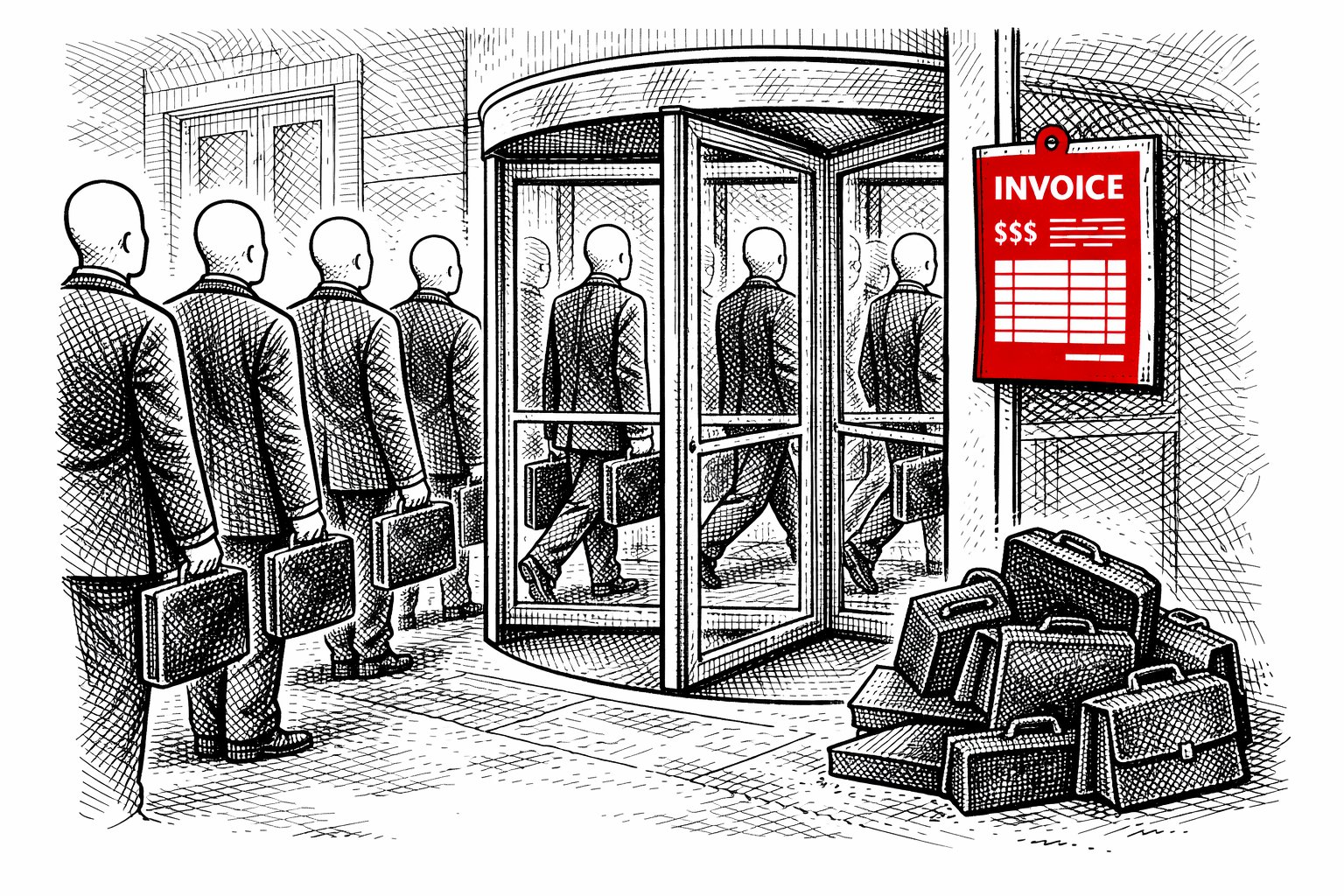
Sir Alex Ferguson retired on 8 May 2013. He had managed Manchester United for 26 years and 10 months. He had won 13 Premier League titles, 5 FA Cups, 4 League Cups, and 2 Champions League trophies. He had operated, simultaneously, as manager, chief scout, director of football, squad architect, motivator, and - crucially - the institutional memory of the entire club.1
On the same day he left, David Gill, the chief executive who had run the business side of United's operation for a decade, also retired.2
Two people left in the same week. Everything they knew left with them.
The Anomaly Mistaken for a Template
Ferguson was not a template. He was an anomaly - a manager who accumulated institutional authority across nearly three decades until the club and the man had become, functionally, the same thing. Modern elite football is not structured to produce this. It is not structured to survive it, either.
The correct response to Ferguson's retirement was to build, for the first time, a structure that did not depend on a single person holding every function simultaneously. A director of football to maintain continuity of recruitment philosophy across managerial changes. A sporting director to own the club's identity independent of whoever was in the dugout. A transfer process with institutional memory rather than one that reset with each appointment.
Manchester United did not do this.
Instead, they appointed David Moyes - a respected manager, handed a six-year contract, and given responsibility for a squad he had not built, a backroom staff he had largely inherited, and a club with no structural support beneath him beyond Ed Woodward, whose expertise was commercial rather than sporting.3
Moyes lasted 10 months. The compensation bill was £4.9m.4
The Compensation Register
The financial record of the post-Ferguson era documents a cost that is remarkable not because of its individual components but because of its rhythm. Every appointment was followed by a sacking. Every sacking was followed by a payment. Every payment was followed by another appointment.
| Manager | Tenure | Departure cost |
|---|---|---|
| Ferguson backroom team | May 2013 | £2.4m |
| David Moyes | Jun 2013 - Apr 2014 (10 months) | £4.9m |
| Louis van Gaal | Jul 2014 - May 2016 (2 years) | £8.4m |
| Jose Mourinho | May 2016 - Dec 2018 (2.5 years) | £19.6m |
| Ole Gunnar Solskjaer | Dec 2018 - Nov 2021 (3 years) | £9.1m |
| Ralf Rangnick (interim) | Dec 2021 - Jun 2022 (6 months) | ~£14.7m † |
| Erik ten Hag | Apr 2022 - Oct 2024 (2.5 years) | £10.4m |
| Dan Ashworth (sporting director) | Jul 2024 - Dec 2024 (5 months) | £4.1m |
| Ruben Amorim | Nov 2024 - Jan 2026 (14 months) | up to £15.9m ‡ |
| Total recorded departure costs, 2013 - 2026 | ~£89m+ | |
| † Rangnick's exit costs include disputed consultancy restructuring charges; precise managerial compensation not separately confirmed. ‡ Filed to NYSE February 2026 as maximum potential settlement figure; exact amount depends on future employment. Hiring fees (Sporting CP for Amorim: £11m; Newcastle for Ashworth: ~£3-5m) excluded from departure column. | ||
The gross cost of the hiring-and-firing cycle since 2013 - including confirmed hiring fees - exceeds £100m. To calibrate that figure: it is roughly equivalent to Manchester United's annual interest payments on their Glazer-era debt. It is approximately 70% of the total dividends paid to the Glazer family between 2015 and 2022.5 It is not a rounding error. It is a structural cost, recurring, with no corresponding asset on the other side of the ledger.
United cut £51.5m from their wage bill in 2024/25 through a 14% staff reduction. Twenty-eight percent of those savings were wiped out by managerial and executive departure costs in the same year. Source: EPL Index / Yahoo Finance (October 2025).
The Missing Structure
There is a detail in the governance record more analytically significant than the compensation numbers.
Manchester United did not appoint a director of football until March 2021 - eight years after Ferguson retired.6
This is not incidental. It is the structural explanation for everything that followed. During those eight years, each of United's managers was expected to fill a role that at most elite clubs is occupied by multiple people. They were asked to identify transfer targets, negotiate with agents, build a squad philosophy, manage a dressing room, satisfy a global fanbase, and win football matches.
Jose Mourinho, appointed in 2016, point-blank refused to allow a director of football to be appointed during his tenure.7 Ed Woodward - the executive vice-chairman whose background was in investment banking and commercial partnerships - had been running United's football operations through a committee-based approach that prioritised internal collaboration over external expertise.8 Under Woodward's oversight between 2013 and 2021, Manchester United invested over £1bn in transfer fees and secured no Premier League titles and no Champions League knockout appearances. Woodward acknowledged in 2019 that the club's recruitment had been "dysfunctional."9
"The previous structure failed Moyes, Van Gaal, Mourinho, Solskjaer and Ten Hag because they were asked to be too much like Ferguson - involved in anything and everything."
ESPN — Is managing Manchester United an impossible job?, November 2024When a director of football was finally appointed - John Murtough in March 2021, alongside Darren Fletcher as technical director - it was described at the time as "fine-tuning, not a revolution."10 Murtough reported to Woodward. Solskjaer still had the final say on transfers. The structural problem was acknowledged and then solved by half-measures.
The Inheritance Problem
Each managerial change produced an inheritance problem that the compensation figures do not capture.
When Mourinho replaced Van Gaal, he inherited a squad containing Memphis Depay and Daley Blind - players Van Gaal had wanted and Mourinho did not.11 When Solskjaer replaced Mourinho, he inherited a squad assembled around a defensive, physically aggressive style antithetical to the attacking, transitional football he wanted to play. When Ten Hag arrived, he inherited a squad in which key players - including Cristiano Ronaldo - were actively incompatible with his positional press system.
Each manager was, in effect, handed a club that had been partially built for someone else and asked to win with it while simultaneously rebuilding it. The cost of this is not recorded in the compensation register. It is recorded in the transfer expenditure figures: Manchester United's net transfer spend across the post-Ferguson era exceeded £900m as each manager discarded his predecessor's players and acquired his own.12
The structural consequence is that United have spent twelve years cycling through managerial appointments rather than building an identity that survives them. Liverpool under Jurgen Klopp built a high-press system embedded into the club's recruitment methodology and Academy philosophy. When Klopp left in 2024, Arne Slot inherited a squad built for the pressing game and won the Premier League with it. At Manchester United, the equivalent period produced eight permanent managers, seven different tactical systems, and a squad of considerable financial value in which no two successive managers' requirements fully overlapped.
The INEOS Cycle
The governance failure pre-dates INEOS's arrival in February 2024. But it is not yet clear that their arrival has ended it.
Dan Ashworth was described by Jim Ratcliffe, at the time of his appointment, as "clearly one of the top sporting directors in the world."13 United paid approximately £3-5m in compensation to Newcastle, waited through 133 days of gardening leave, and confirmed his appointment on 1 July 2024. He was in post for 161 days before departing in December 2024.14 The cost of his exit was £4.1m.15
In October 2024, Erik ten Hag was sacked thirteen games into a season for which he had been given a contract extension four months earlier.16 The combined compensation for Ten Hag and Ashworth in the 2024/25 financial year was £14.5m.17 United had simultaneously cut £51.5m from their wage bill through a 14% reduction in staff numbers. Twenty-eight percent of those savings were consumed by managerial sacking costs in a single year.18
Ruben Amorim was appointed in November 2024. Ratcliffe stated publicly he needed three years to demonstrate what he could do.19 Amorim was sacked in January 2026 - fourteen months later, with eighteen months remaining on his contract. The maximum compensation liability, disclosed in a February 2026 NYSE filing, was £15.9m. The total cost of hiring and firing Amorim - including the £11m paid to Sporting CP - approached £27m.20
Ashworth spent more time waiting to arrive at Manchester United than he spent in the job. Amorim was promised three years and given fourteen months.
What the Pattern Costs
The compensation register documents the most visible cost of the cycle. The invisible costs are larger.
Each managerial change resets the backroom staff. The coaches who build relationships with players, who understand individual physical profiles, who have embedded the defensive shape across a season - they leave. Their institutional knowledge leaves with them. The replacement manager arrives with his own staff, his own system, and a squad whose habits were trained for something different.21
Each change also resets the transfer philosophy. Agents with relationships built around the previous manager's preferences lose influence. New agents acquire it. The scouting network's priorities shift to match the new manager's requirements. Players identified and approached in one window are quietly deprioritised in the next.
And each change costs time. The average post-Ferguson United manager lasted approximately 21 months. Premier League title campaigns - Leicester in 2015/16, Liverpool in 2019/20, City's consecutive titles - tend to be built across three to four years of squad cohesion under a stable coaching philosophy.22 Manchester United have not had a permanent manager in post for four years since Ferguson retired.
Kieran Maguire, football finance lecturer at the University of Liverpool, has noted that compensation costs are "less than 1% of United's revenues over the same period."23 The observation is arithmetically correct and structurally misleading. The financial cost of the cycle is not primarily the compensation payments. It is the opportunity cost of twelve years of instability - the squads assembled and discarded, the players who arrived at the wrong time, the transfer windows spent correcting the previous manager's errors rather than building towards the next one's requirements.
The Pattern
Every post-Ferguson Manchester United manager has been sacked. This fact is so routinely noted that it has acquired the status of dark comedy. It is not funny. It is a governance failure in documentary form.
The conditions for that failure were not created by any individual manager. Moyes, Van Gaal, Mourinho, Solskjaer, Rangnick, Ten Hag, and Amorim arrived at different stages of the club's trajectory, with different resources, different squad compositions, different tactical mandates. What they shared was a structural context that made sustained success improbable: a club without coherent institutional memory, without a stable football identity that survived managerial turnover, without - for eight of those twelve years - a director of football to carry continuity across appointment cycles.
The Glazer family, as majority owners throughout the entirety of this period, were the ultimate authorities over the governance structure that produced this outcome. They appointed Woodward. They retained the committee-based recruitment model for eight years after its inadequacy had been documented. They were the counterparty to every compensation payment.24
"Until the club finds a coherent footballing identity and sticks to it, money will continue to be wasted on short-term fixes."
EPL Index — Revealed: How much Manchester United have spent sacking managers, October 2025The compensation register is the financial artefact of that governance. It does not record the failure of individual managers. It records the cost of an ownership that managed the club as a commercial asset - attentive to revenue, dividend, and debt service - while allowing the football structure to operate without the institutional architecture that sustainable success requires.
The pattern is not a series of coincidences. It is a predictable outcome of a predictable set of conditions.
It has now cost in excess of £100m.